Single-Duplex DNA Sequencing: A Leap toward Ultra-Accurate Genomics with CODEC

Sayantan Laha , PhD 28.11.2026

Introduction:

Accurate detection of very low-frequency variants is instrumental in understanding the mutational landscape of rare genetic diseases and disorders, which helps in early disease detection and diagnosis. In many of these cases, the disease onset or pathogenesis is governed by mutations characterized by very low frequency of occurrence, termed as ultra-rare mutations. However, sequencing errors introduced during PCR amplification and library preparation makes the identification of true signals more challenging.

In addition, the intrinsic error rates of traditional next-generation sequencing (NGS) methods further compound this problem. Though approaches such as Duplex Sequencing overcome this limitation to some extent by independently sequencing both strands of a DNA duplex, they require complex workflows, custom adapters, and substantial read depths. A recent sequencing technology termed CODEC (Concatenating Original Duplex for Error Correction) developed by Bae et. al. (2023) in Nature Genetics offers a potential solution to this bottleneck by preserving duplex information while remaining broadly accessible to conventional sequencing laboratories.

DNA visualization

Methodology:

Principle of CODEC

Physically links complementary strands of the same DNA molecule into a single continuous construct before sequencing.

Read Pair Composition

Each read pair contains information from both strands of the DNA duplex.

Duplex Reconstruction

Downstream analysis uses the concatenated read structure to reconstruct the original duplex and identify complementary base information.

Error Identification

Errors occurring independently on one strand can be distinguished from genuine mutations, which appear in complementary form on both strands.

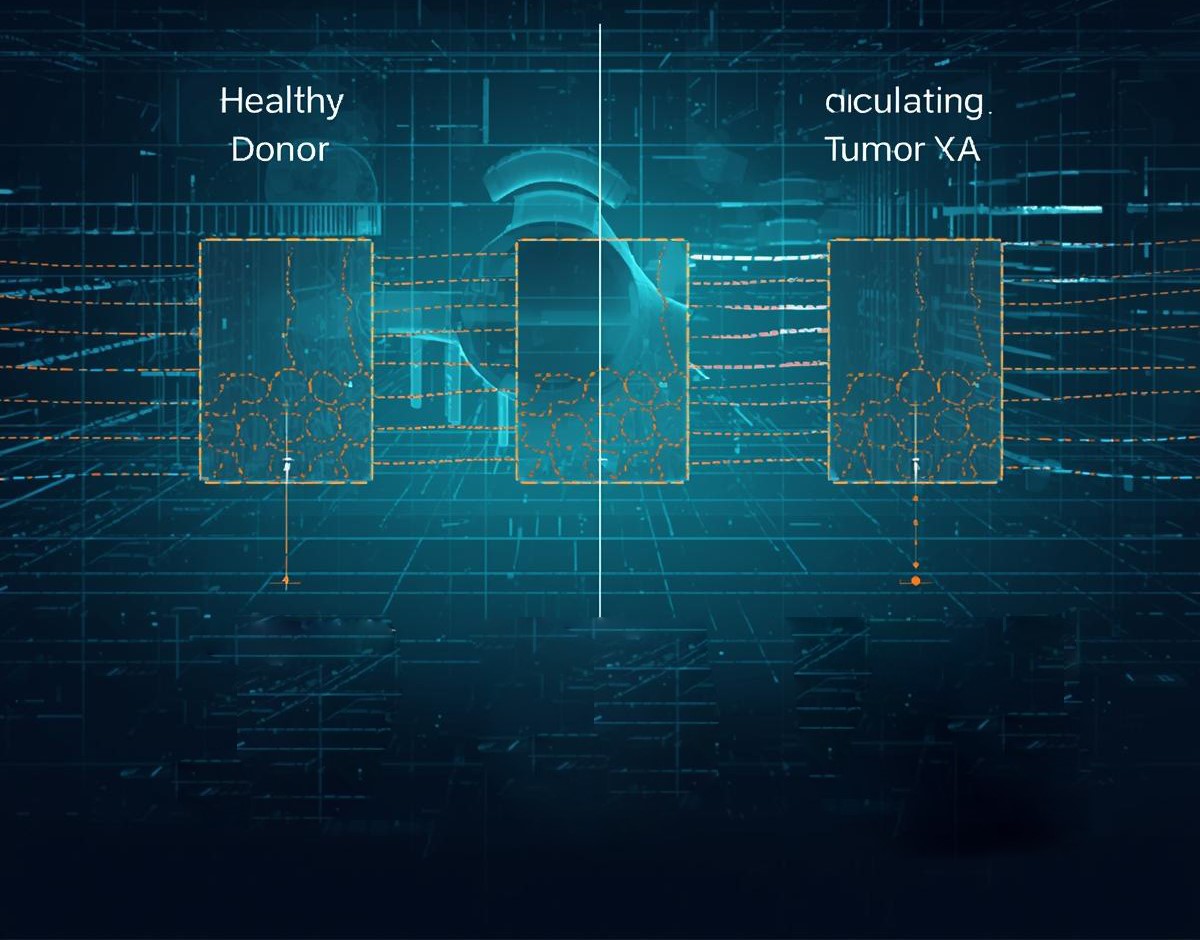
CODEC was tested on multiple sample types, including healthy donor DNA, cell-line DNA, and patient-derived circulating tumor DNA. The performance of CODEC was evaluated against standard Illumina sequencing as well as duplex sequencing benchmarks. CODEC was found to achieve a substantially higher accuracy (~10⁻⁶) compared to conventional Illumina sequencing (~10⁻³). This places it near the performance level of true duplex sequencing while retaining the simplicity and scalability of short-read workflows. CODEC was able to recover original duplex molecules with high fidelity, effectively eliminating most of the errors pertaining to single-stranded sequencing such as polymerase-induced substitutions. CODEC also reported much fewer false positives and sequencing artifacts compared to standard sequencing practices, even when carried out at significantly lower total read depth.

DNA visualization

Advantages and Future Potential:

Works seamlessly with Illumina

  • Uses standard paired-end reads
  • No special instruments or chemistries needed
  • Easy to deploy across labs and platforms

High Throughput + High Recovery

  • Physical concatenation boosts duplex recovery
  • Strong performance even at low sequencing depths
  • Avoids extreme depth required by traditional duplex methods

Accurate without Ultra-Deep Sequencing

  • Maintains accuracy while reducing cost and compute load
  • Efficient molecule recovery for more usable data per run

Fits into existing pipelines

  • Fully compatible with short-read sequencing workflows
  • Ideal for research and clinical / translational genomics settings

As CODEC is compatible with existing Illumina systems, there is no need for adopting special instrumentation or sequencing chemistries. This makes CODEC deployable at a wide scale, lowering barriers for institutions targeting high-accuracy assays without adopting long-read or niche duplex workflows.

CODEC’s physical concatenation step dramatically increases effective duplex recovery even at low sequencing depths. It has been shown to achieve strong performance even without ultra-deep sequencing, reducing costs and computational load. CODEC can easily be integrated into established short-read sequencing pipelines, potentiating both research and translational genomics.

Applications:

CODEC has clear potential for applications requiring exceptionally precise measurement of genetic variation, including but not limited to:

  1. Liquid biopsy and early cancer detection, where identifying few tumor‑derived fragments among millions of normal fragments is critical.
  2. Somatic mutation research, including age‑associated mutational burden in healthy tissues.
  3. Validation of rare variants uncovered in population sequencing or disease‑specific screens.
  4. Quality‑assurance settings, where ultra‑low error profiles are necessary to confirm or exclude rare events.

Conclusion:

CODEC is a practical, accurate, and scalable advance in error‑corrected DNA sequencing. Its substantial error reduction, efficient duplex recovery, and compatibility with existing NGS infrastructure position it as a highly promising method for sensitive variant detection and somatic mutation research.

The findings reported in the study highlight CODEC’s potential in broadening access to ultra‑accurate sequencing and supporting emerging applications where reliability at very low variant frequencies is critical. Bencos routinely provides both short and long sequencing services based on Illumina as well as PacBio workflows.

There is already an increasing demand for whole genome and whole exome sequencing studies with the aim of identifying rare and ultra‑rare variants for early detection and diagnosis of genetic disorders. Since CODEC is compatible with existing Illumina systems, it can be seamlessly adopted alongside these sequencing techniques, enabling widespread applications for whole exome and whole genome sequencing workflows.

Reference:

Bae, J.H., Liu, R., Roberts, E. et al. Single duplex DNA sequencing with CODEC detects mutations with high sensitivity. Nat Genet 55, 871–879 (2023). https://doi.org/10.1038/s41588-023-01376-0

Stay in the Loop

Keep up with new products, services and enhancements to the offerings.

We respect your privacy — Unsubscribe anytime.